Dyno Humanoid Robot Research and Development
Director of Robot Control and Software · Robot Mobility Expert
Funded research & engineering
Every programme below is one I was funded to work on, in the role the contract gave me — from core developer on Vietnam's first pico-satellite to technical leader of a nine-year national research centre for urban air mobility digital twins, and now director of robot control and software for a humanoid platform. Where a programme outlived my appointment, the card says so.
Dates on each card are the period I personally worked on the programme. Several grants run past that — the nine-year urban air mobility centre is funded to 2029 — and the timeline below draws the full funded span as a faint bar behind the solid one. Papers counts the 42 entries on the publications page that the cards link out to.
All 16 programmes on one axis, oldest first. The solid bar is the period I worked on it; the faint bar behind it is the full funded span of the programme itself.
Grouped into the four eras of the work, newest first. 8 led, 8 contributed to as staff or core researcher. Where the work produced papers, the identifiers link straight to the entry on the publications page.
Back in Vietnam and back on hardware. Humanoid robotics at VinDynamics, and the avionics function of a national rotorcraft programme before it.

Director of Robot Control and Software · Robot Mobility Expert

Manager of Avionics System
The avionics function of a national rotorcraft programme: the technical vision for on-board computing, the hardware and software teams doing the early research on modern helicopter computing and communication, and the AI work on real-time flight data analytics and automatic control.
Programme runs to Dec 2027; my involvement ended with the Viettel appointment in Mar 2026.
The Konkuk decade. A nine-year national research centre for UAM digital twins, a middle-career grant on resilient smart-city services, certified neural flight control, and a mobility talent programme run as applied R&D.

Project Technical Leader · Lead Researcher
The flagship programme of the decade: an AI-driven digital twin ecosystem for urban air mobility, linking eVTOL vehicle dynamics to cloud and edge simulation, dependable platforms, blockchain and federated learning, and multi-agent AI — and the technical roadmap that held those work packages together.
Nine-year programme funded to May 2029; my involvement ended with the Konkuk appointment in Jun 2025.

Lead Researcher
A talent programme run as applied R&D: graduate projects on autonomous navigation, SLAM and deep reinforcement learning, sensor-data processing and reliable vehicle service infrastructure, aligned with what the mobility industry actually needed from software.
Programme funded to Feb 2027; my involvement ended with the Konkuk appointment in Jun 2025.

Lead Researcher
The i-MeC2 framework: secure, reliable, multi-agent public-safety services for smart cities, built on bio-inspired collaboration and intelligent edge and cloud computing — and the quantitative models that tell an operator how much resilience a given architecture actually buys.
Five-year programme funded to Aug 2026; my involvement ended with the Konkuk appointment in Jun 2025.

Lead Researcher · Advisor
Learned flight controllers you can argue about formally: deep neural attitude and flight control carrying exponentially stabilizing control-Lyapunov certificates, tiltrotor transition under safety constraints, and verification machinery strong enough to certify what the network learned.
Research thrust running to 2026; my involvement ended with the Konkuk appointment in Jun 2025.
Stochastic models pointed at real infrastructure: active-active clouds, software-defined networks, hybrid cloud economics, naval survivability, and the reliability of an early unmanned aircraft.

Lead Researcher
A bilateral study putting a number on business continuity: how much a geographically distributed, active-active cloud is really worth once you model the sites, the links between them, and the recovery policies that connect the two.

Technical Staff
Model-based technology assessment for high-performance hybrid cloud services — virtualized servers, software-defined networks, data-centre networks — turned into concrete guidance on redundancy, migration, rejuvenation, capacity and the cost of an SLA.

Technical Staff
The GENESIS cloud platform for distributed, parallel streaming analytics in logistics and transportation, with active-active high availability and disaster tolerance as first-class requirements rather than afterthoughts.

Software Developer · Core Researcher
Defence-funded work on integrated survivability analysis for naval vessels: the software and the analysis technique behind how a ship's mission capability degrades as its compartments and systems are damaged.

Researcher
A reliability study of an advanced unmanned aerial vehicle — the first time the dependability modelling built for data centres was pointed at an airframe, a decade before the same question returned as UAM mission dependability.
The engineering apprenticeship. A CubeSat in Hanoi, then unmanned airships, balloon payloads and survey aircraft in Seoul — the systems that made redundancy and survivability feel concrete rather than theoretical.

Core Software Developer · Technical Staff
A science-and-technology cooperation programme flying unmanned aircraft for resource exploration and environmental monitoring, and the embedded flight and mission software that made those surveys repeatable.

Researcher
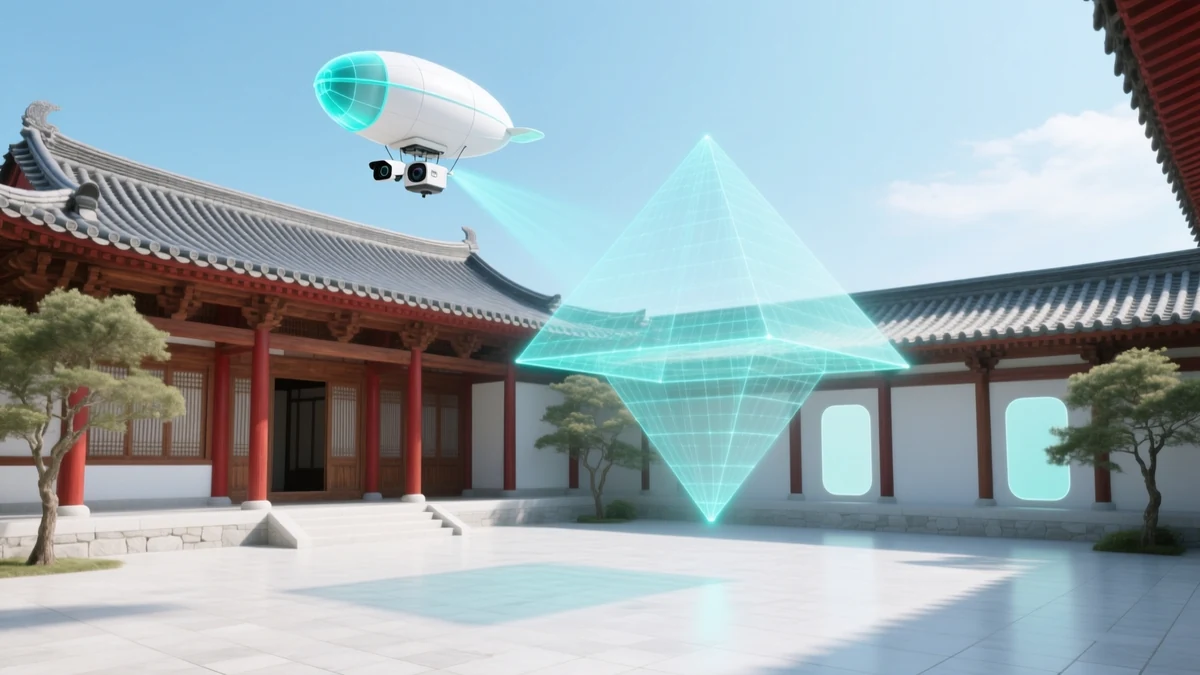
Unmanned airships used as a slow, stable camera platform to build three-dimensional spatial information for historical sites — aerial photogrammetry where a fixed-wing survey would be too fast and a crane too intrusive.

Core Software/Hardware Systems Developer
A near-space balloon platform built as a teaching instrument: payload electronics, on-board software and telemetry cheap enough to fly with students, close enough to a real spacecraft to teach the discipline.

Researcher
Automatic control system development for an unmanned craft — the embedded hardware and software architecture, the sensing, and the control loop, published as the unmanned airship control work that opens the aerospace strand of the publication list.

Core Software/Hardware Developer · Technical Subteam Leader
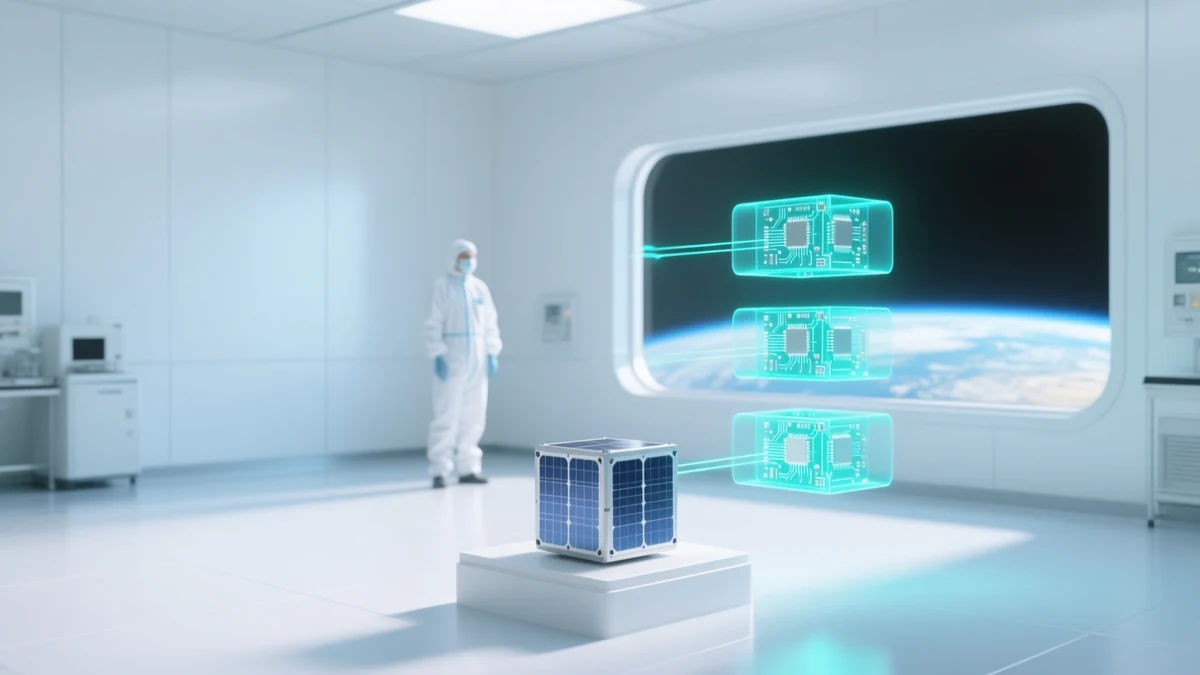
Where all of it starts. A 10 cm, 1 kg CubeSat built from commercial off-the-shelf parts as Vietnam's training platform and Earth-observation mission — and the first system where the answer to "will it survive?" had to be designed in, not measured after. The reliability question raised here became the M.Sc. thesis and, eventually, the whole dependability track.